

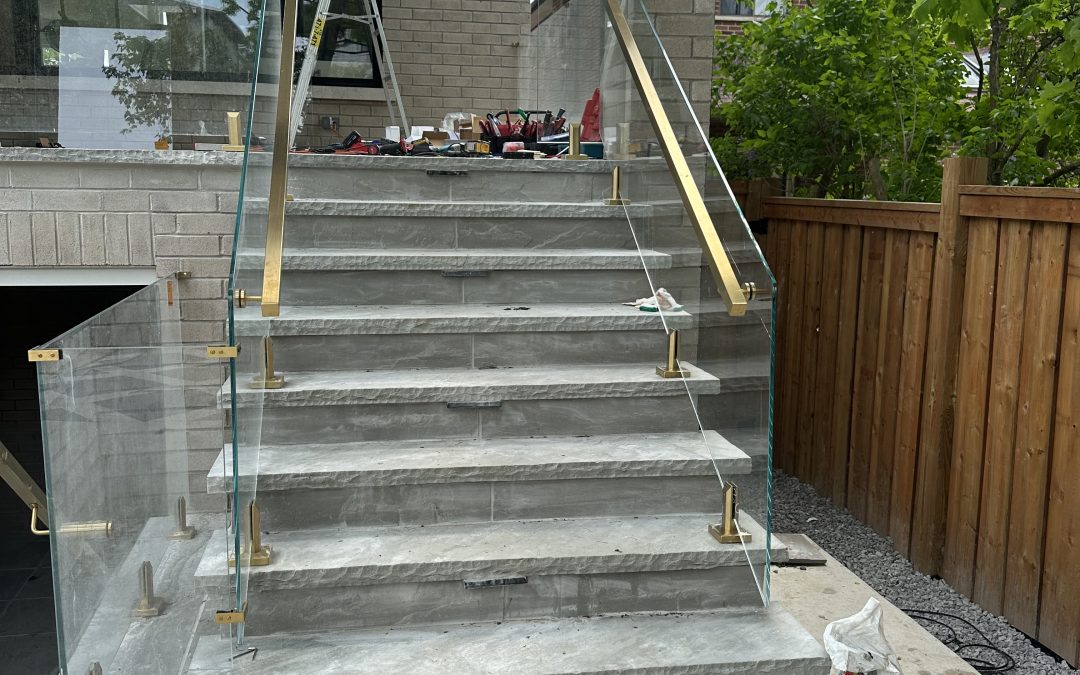
When selecting a glass railing, the decision often comes down to two main options: standard float glass or low-iron glass. Both are tempered for safety and durability, but they look distinctly different once installed. Understanding these visual nuances helps you decide if the premium clarity of low-iron glass is the right fit for your specific project in Ontario.
The Visual Difference: Tint vs. Clarity
Standard float glass contains a small amount of iron oxide, which gives it a characteristic greenish hue. This tint is subtle in thin panes but becomes more noticeable in thicker panels, such as the 12mm or 19mm tempered glass commonly used for balustrades. Low-iron glass is manufactured with reduced iron content, resulting in a significantly clearer, neutral appearance. It reflects less color and allows light to pass through with minimal distortion.
The difference is most apparent when viewing the glass edge-on or when the pane is thick. In a standard glass railing, the bottom edge may appear darker or greener, especially against light-colored flooring. Low-iron glass maintains a consistent, almost invisible profile, making the barrier feel less like a solid wall and more like a transparent shield.
Applications Where Clarity Wins
Low-iron glass is not a universal requirement, but it shines in specific design contexts. It is particularly beneficial when you want to emphasize views or maintain a seamless aesthetic.
- Waterfront and View Properties: If your home overlooks a lake, garden, or skyline, low-iron glass minimizes the visual barrier between you and the scenery.
- Light-Reflective Finishes: Pairing low-iron glass with white marble, light oak, or chrome fixtures prevents the green tint from clashing with neutral palettes.
- Frameless Designs: Without metal frames to distract the eye, the glass itself becomes the focal point. Low-iron glass ensures the material disappears into the background.
- Interior Staircases: In open-concept living spaces, clear glass helps maintain the flow of light and sightlines, keeping the area feeling spacious.
For homeowners in the GTA looking to maximize natural light, this clarity can be a defining feature of the interior design.
Tradeoffs and Considerations
Choosing low-iron glass involves weighing aesthetic benefits against practical factors. While the visual difference is striking, it is not always the best choice for every project.
- Cost: Low-iron glass is typically more expensive than standard float glass due to the specialized manufacturing process.
- Availability: Lead times may vary depending on current stock and manufacturing schedules.
- Design Context: In darker, industrial, or rustic settings, the slight green tint of standard glass may actually complement the surrounding materials better than a perfectly clear pane.
The surrounding finishes play a crucial role. If your railing is installed against dark stone or rich wood tones, the difference between standard and low-iron glass may be less perceptible. However, against light backgrounds, the clarity of low-iron glass provides a sharper, more refined look.
Frequently Asked Questions
Is low-iron glass stronger than standard glass?
No. Both types are tempered to the same safety standards. The difference is purely optical, relating to the iron content in the glass composition, not its structural integrity.
Can I replace standard glass with low-iron glass later?
It depends on the existing hardware and panel dimensions. If your current system uses the same thickness and mounting style, a replacement is often possible, but a professional assessment is required to ensure compatibility.
Does low-iron glass require special cleaning?
No. It is cleaned and maintained just like standard glass. However, because it is clearer, water spots or fingerprints may be slightly more visible, so regular cleaning helps maintain the pristine look.
Discuss Your Project
Deciding between standard and low-iron glass is a matter of design preference and specific architectural context. To see the difference in person, you can explore our Glass Railings portfolio or request a custom estimate. Our team can help you evaluate how different glass types will interact with your finishes and lighting, ensuring the final result aligns with your vision.