

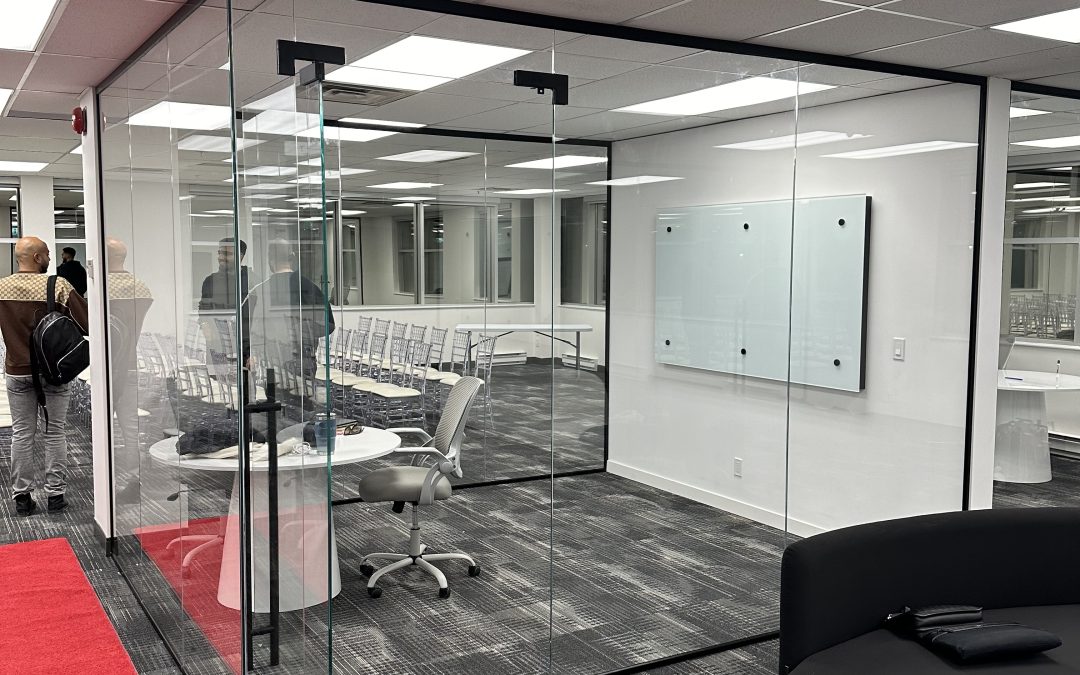
When planning an office renovation in the Greater Toronto Area, the choice between traditional drywall and demountable glass partitions often hinges on how long your current layout will remain relevant. Drywall offers a solid, opaque barrier that is straightforward to install and maintain. However, it is a permanent fixture. Once the studs are framed and the board is taped, moving that wall requires demolition, dust management, and significant downtime.
Glass partitions, specifically demountable systems, operate on a different logic. They are designed to be reconfigured. For organizations in Ontario that anticipate shifting team structures or evolving hybrid work models, this modularity can be a strategic advantage. Below is a practical comparison of the two systems across key operational factors.
Flexibility and Long-Term Space Planning
The primary distinction is reversibility. Drywall is a fixed infrastructure element. If a department grows or a new meeting room is needed, you are often looking at a full-scale renovation project. This involves cutting into ceilings, rerouting electrical, and disposing of waste.
In contrast, demountable glass systems use a track-based mounting method. Panels can be removed and reinserted in different positions without damaging the floor or ceiling. This allows for incremental changes rather than total overhauls. For space planning, this means you can test new configurations. If a glass-walled office is too large, you can adjust the layout without the cost of tearing out masonry or drywall. This adaptability is particularly useful for companies that lease space and may need to return the premises in a specific condition at the end of a lease term.
Daylight, Privacy, and Acoustics
Daylight is a critical factor in modern workplace design. Drywall blocks natural light, often requiring additional artificial lighting in interior rooms, which increases energy consumption and can affect occupant comfort. Glass partitions allow light to penetrate deep into the floor plate, reducing the need for overhead lighting during the day. This can create a more open and inviting atmosphere, even in dense urban office buildings.
Privacy is a common concern when choosing glass. However, modern glazing options address this. You can specify clear glass for openness, frosted glass for semi-private zones, or acoustic glass for high-noise environments. It is important to note that standard single-pane glass does not inherently stop sound. For true acoustic separation, you need specific acoustic glazing and proper sealing. A qualified professional can help you determine the appropriate glazing type for your specific noise requirements, as building codes and local regulations may vary.
Disruption During Installation
Installing drywall is a dirty process. It involves cutting, dust, and the potential for debris to spread across the office. This often requires the space to be vacated for several days. Glass partition installation is generally cleaner and faster. The panels are pre-fabricated and assembled on-site. While there is still some construction activity, the process is less invasive. There is no wet work, no taping, and no painting. This can significantly reduce the downtime for your team, allowing you to maintain business operations with minimal interruption.
Frequently Asked Questions
Are glass partitions more expensive than drywall?
Upfront, glass partitions often have a higher material cost than basic drywall. However, when you factor in the long-term savings from reduced lighting costs, the ability to reconfigure without demolition, and the potential for higher property value, the total cost of ownership can be competitive. It is a balance between initial outlay and long-term flexibility.
Can I add glass partitions to an existing drywall office?
In many cases, yes. If the existing structure allows for the addition of a track system, you can replace drywall sections with glass to open up the space. This is a common renovation strategy to modernize older office spaces without a full rebuild. A site assessment is necessary to determine structural feasibility.
How do I maintain glass partitions?
Maintenance is straightforward. Regular cleaning with a non-abrasive glass cleaner is sufficient. You should also periodically check the hardware and seals to ensure they remain tight and effective. Unlike drywall, which can be damaged by impacts or moisture, glass is durable and easy to wipe down.
If you are considering a renovation that balances aesthetics with functionality, a custom glass solution may be the right fit. We can help you evaluate your specific space and requirements. To discuss your project and receive a tailored proposal, please request an Estimate from our team. For more information on our range of Office Partitions, explore our portfolio to see how we have helped other businesses in the region create dynamic, light-filled workspaces.