

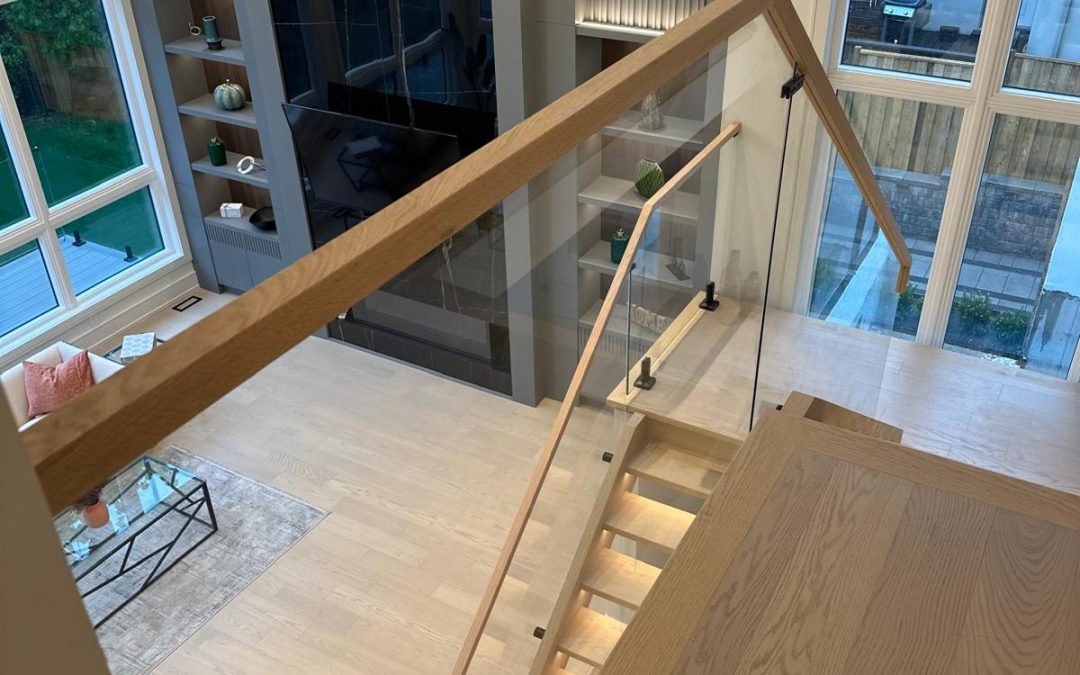
Installing glass railings on a rooftop terrace offers an unobstructed view, but it introduces specific engineering and aesthetic challenges that ground-level patios do not face. In the Greater Toronto Area, where wind speeds can shift rapidly and seasonal temperature swings are significant, the structural integrity and maintenance of your barrier are critical. This guide outlines the key factors to consider when designing a safe, durable glass railing system for elevated spaces.
Managing Wind Exposure and Structural Load
Rooftop environments are more exposed to wind than lower levels. While glass itself is rigid, the mounting hardware must withstand lateral forces that push against the panels. In Ontario, wind loads can vary based on building height, surrounding structures, and local topography. A professional assessment ensures that the posts, clamps, or base channels are rated for the specific wind pressure expected at your elevation. It is essential to confirm that the structural substrate—whether concrete, steel, or wood—can support the additional load of the railing system without compromising the roof’s integrity.
Addressing Drainage and Water Ingress
Water management is often the most overlooked aspect of rooftop railing design. Rain and snowmelt must flow freely away from the building envelope. If a glass railing is installed too close to a parapet wall or roof edge, it may disrupt the natural drainage path, leading to pooling water or ice dams. Designers must account for the slope of the roof and the placement of drains. Additionally, the gap between the glass and the substrate should allow for thermal expansion and contraction while preventing water from seeping into the roof membrane. Proper flashing and sealing details are crucial to maintaining the waterproofing of the terrace.
Privacy, Access, and Maintenance
Unlike solid masonry or wood, glass railings offer transparency, which can be a privacy concern depending on the surrounding neighborhood. If your terrace overlooks neighboring properties, consider the angle of the glass and the height of the barrier. For access, ensure that the railing design does not interfere with emergency egress routes or maintenance access to roof equipment. Maintenance is generally straightforward, but rooftop railings are exposed to more UV radiation and weathering. Regular cleaning with non-abrasive solutions helps prevent mineral deposits and etching, which can affect clarity over time.
FAQ
Q: Can glass railings be installed on any type of roof?
A: Not without careful assessment. The roof structure must be able to support the weight of the railing and the potential wind loads. A qualified structural engineer should review the project to ensure safety and compliance with local building standards.
Q: How do I maintain glass railings in cold weather?
A: Use appropriate cleaning products that do not freeze or damage the glass. Avoid using abrasive tools that could scratch the surface. In winter, ensure that ice does not build up at the base of the railing, as this can add significant weight and stress to the mounting points.
Discuss Your Project
Every rooftop terrace has unique constraints, from structural limitations to aesthetic preferences. To ensure your glass railing system is safe, functional, and visually appealing, it is important to work with a team that understands the specific demands of elevated installations. Request an estimate from Bonafide Glass to discuss your project requirements and explore custom solutions tailored to your property.