

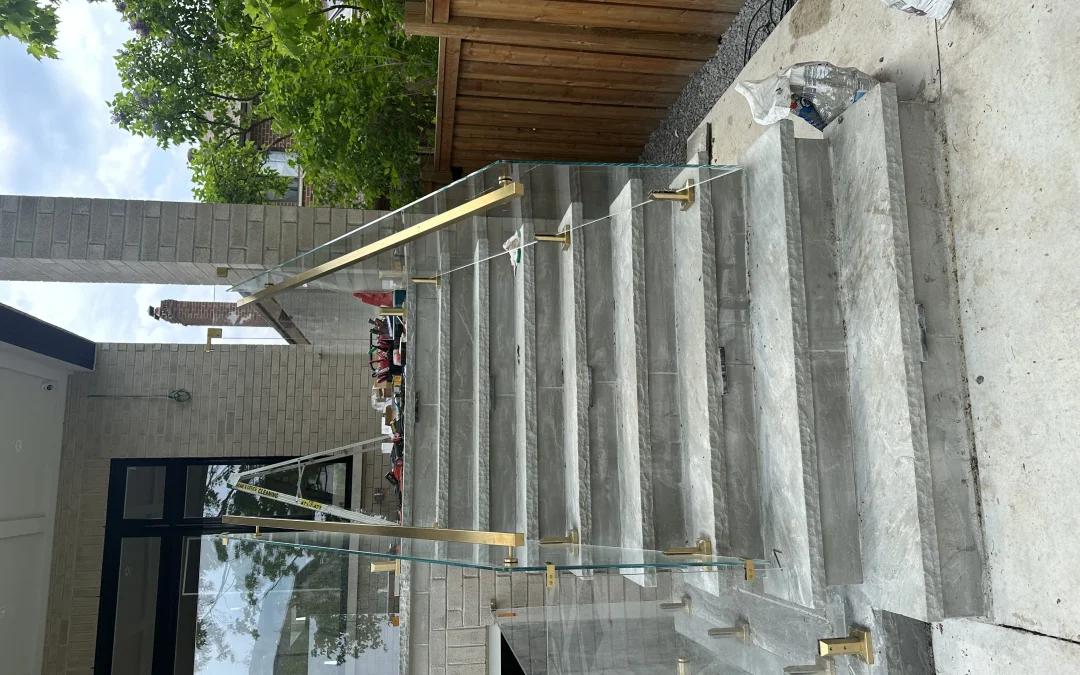
When selecting a glass railing, the visual impact often matters more than the material itself. The support system dictates how much of the view remains unobstructed, how the floor line reads, and how much time you will spend maintaining the installation. For homeowners and designers in the Greater Toronto Area, understanding these distinctions is crucial before committing to a specific aesthetic.
How Support Systems Alter the View
The primary difference between railing types lies in the interruption of the sightline. Post-supported systems use vertical metal or wood posts that attach to the glass panels. While structurally robust, these posts create a rhythmic pattern that breaks up the panoramic view. This is often suitable for commercial spaces or outdoor decks where a defined boundary is desired, but it can feel visually busy in a residential interior where openness is the goal.
Channel systems, on the other hand, use a continuous metal base to hold the glass in place. This eliminates the vertical interruptions of posts, offering a cleaner look. However, the channel itself adds a visible line at the floor level. Depending on the finish, this can either complement the floor material or create a visual barrier that interrupts the flow of the space. It is a middle ground that balances structural simplicity with visual clarity.
Frameless Options and Architectural Flow
Frameless glass railing sightlines offer the most uninterrupted view. By using minimal hardware, often just small standoffs or hidden clamps, the glass appears to float. This option maximizes light transmission and preserves the architectural lines of the room. In a modern Ontario home, this can make a smaller space feel significantly larger by removing visual weight from the perimeter.
However, frameless systems require precise measurement and installation. The glass must be thick enough to handle the loads without the aid of a channel or posts. This often means using heavier, more expensive glass panels. The trade-off is a sleeker, more sophisticated finish that integrates seamlessly with the surrounding architecture.
Cleaning and Maintenance Considerations
Every glass railing requires cleaning, but the support system affects how difficult that task is. Post-supported systems can be easier to clean because the glass panels are often smaller and can be removed or accessed more easily. Channels require careful cleaning around the base to prevent water damage or debris buildup. Frameless systems, while visually superior, can be more challenging to clean at the edges where the glass meets the floor or wall. You must ensure that no gaps are left where dirt can accumulate, which requires a high level of craftsmanship during installation.
- Posts: Easier panel replacement; visible vertical lines.
- Channels: Continuous base; potential for visible floor lines.
- Frameless: Maximum view; requires precise fit and heavy glass.
FAQ
Which system is best for a curved staircase?
Curved stairs often require custom-cut glass, which can be challenging for frameless systems. Post-supported or channel systems may offer more flexibility in accommodating the curve without excessive waste or structural complexity. A professional assessment is needed to determine the best approach.
Does frameless glass look different from tempered glass?
Frameless refers to the support system, not the glass type. All glass railings should be tempered for safety. Frameless systems typically use thicker tempered glass to ensure stability without additional supports.
Discuss Your Project
Choosing the right railing system depends on your specific architectural goals and site conditions. If you are considering a glass railing for your home or business, we can help you evaluate the best option for your space. Request an estimate to discuss your requirements with our team and explore how a custom solution can enhance your space.