

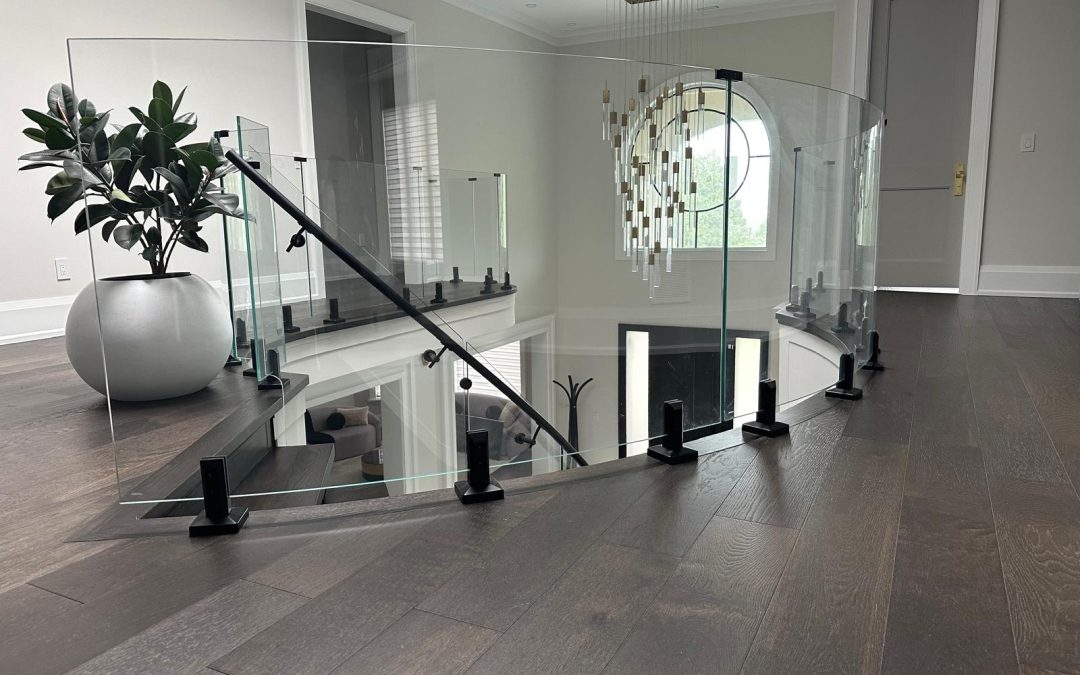
When children are running through the house or pets are jumping onto counters, the staircase becomes a high-traffic zone. Many homeowners in the Greater Toronto Area choose glass for its visual lightness, but a standard installation is not always the best fit for a busy family. Designing family-friendly glass railings requires looking beyond aesthetics to consider how the structure interacts with daily life, small hands, and curious paws.
Visibility and the Illusion of Space
One of the primary reasons families select glass is to maintain sightlines. In a home with young children, being able to see across the stairwell or into the lower level can provide a sense of security. However, visibility works both ways. If you have a pet that tends to jump or climb, a clear glass panel offers no visual barrier to stop them. This does not mean glass is unsuitable, but it does mean the design must account for behavioral habits. A solid handrail can provide a tactile boundary that glass alone cannot, helping to signal to both children and animals where the edge is.
Managing Gaps and Handrail Integration
The structural method you choose dictates the gaps between glass panels and the floor or wall. For families with toddlers, minimizing large voids is a common priority. Frameless systems offer a seamless look but may have different spacing characteristics than framed or semi-framed options. It is crucial to discuss the specific gap sizes during the design phase. While local building codes set minimum safety standards, your family’s specific needs may call for tighter tolerances or additional structural elements. A substantial handrail, whether made of wood, metal, or composite material, can be integrated into the glass system to provide a secure grip. This is particularly important for children who are learning to navigate stairs independently. The handrail should be positioned at a height and diameter that is comfortable for small hands, ensuring they can hold on securely without straining.
Surface Care and Pet Considerations
Glass is a non-porous surface, which makes it inherently easier to clean than wood or metal balusters. For homes with pets, this is a significant advantage. Hair, dander, and occasional paw prints can be wiped away with standard glass cleaners without leaving residue. However, the type of glass matters. Tempered glass is standard for safety, but the finish can affect maintenance. Polished glass shows fingerprints and water spots more readily, requiring more frequent cleaning to maintain a pristine look. If your household is prone to messy hands or muddy paws, a slightly textured or froged finish might reduce the visibility of smudges, though this can alter the visual transparency. Discuss your cleaning habits with your designer to determine if a specific coating or finish would reduce the maintenance burden.
Questions to Ask During Design
Before finalizing your design, consider raising these specific points with your glass provider:
- Gap Spacing: What is the maximum gap between panels, and does it meet our comfort level for small children?
- Handrail Options: Can we add a handrail that is comfortable for a child’s grip without compromising the glass aesthetic?
- Gate Integration: If we plan to install a safety gate at the bottom of the stairs, how will the glass railing accommodate this without creating a pinch point?
- Edge Profiles: Are the glass edges polished smooth to prevent snagging clothing or toys?
Frequently Asked Questions
Is glass safe for homes with dogs?
Glass railings are generally safe for pets, provided the glass is tempered and installed correctly. However, if your dog is a jumper, you may need to supplement the railing with a mesh gate or a solid barrier to prevent them from climbing over.
Do glass railings require more cleaning than wood?
Not necessarily. Glass is non-porous and does not absorb stains. While it may show fingerprints more visibly, it wipes clean easily. Wood may require periodic refinishing or sealing, which can be more time-consuming.
Can we add a handrail later?
It is best to plan for a handrail during the initial design phase. Retrofitting a handrail onto an existing glass system can be complex and may affect the structural integrity or aesthetic balance. Discuss your handrail preferences early in the process.
Discuss Your Custom Design
Every family home is different, and your railing design should reflect your specific lifestyle. Whether you are in Toronto, Ottawa, or elsewhere in Ontario, a custom approach ensures that safety, maintenance, and aesthetics are balanced. Request an estimate from Bonafide Glass to discuss how we can tailor a glass railing system to your family’s needs. Our team can help you navigate the options for gaps, handrails, and finishes to create a solution that is both beautiful and practical for daily life.