

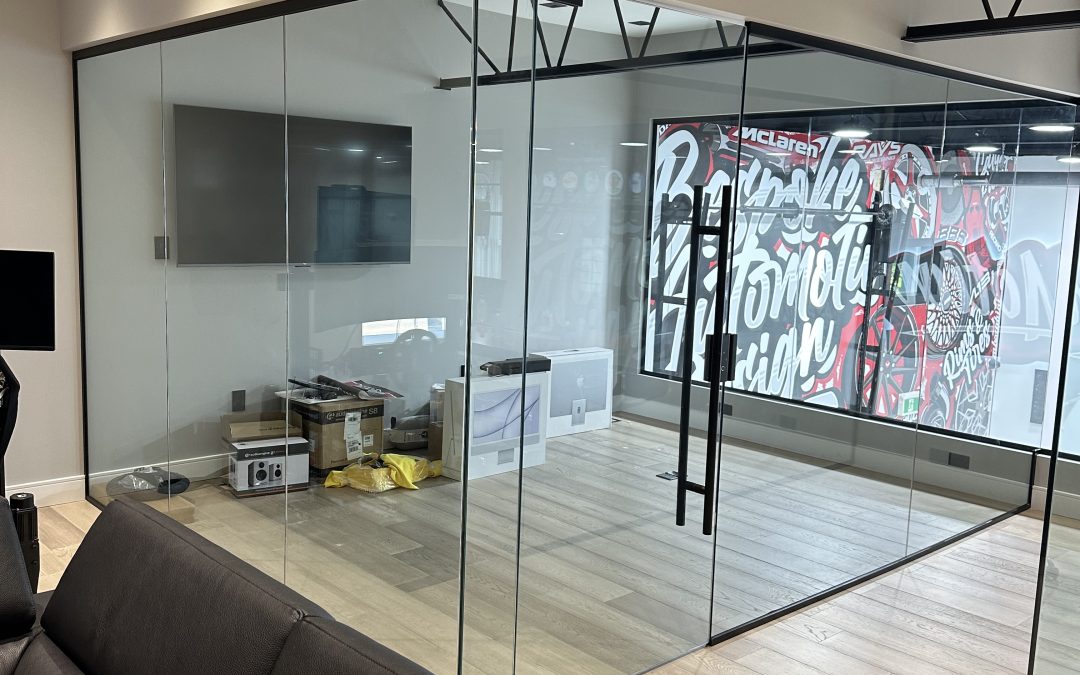
Executive suites and private boardrooms often face a specific design challenge: how to maintain a sense of enclosure without creating a visual barrier that isolates the space from the rest of the office. Glass office fronts offer a solution that preserves sightlines and natural light while clearly defining the boundary of a private area. However, selecting the right configuration requires careful attention to material specifications, hardware integration, and acoustic performance.
Privacy Versus Transparency
Not all glass is created equal when it comes to privacy. Standard clear glass provides visual connection but offers little concealment. For spaces where confidentiality is paramount, such as legal consultation rooms or executive offices, frosted or etched glass panels can provide a degree of privacy while still allowing light to pass through. Alternatively, smart glass technology, which changes from clear to opaque at the touch of a button, offers dynamic control over visibility. This is particularly useful in meeting spaces that need to transition between open collaboration and private discussion.
When choosing between these options, consider the primary function of the room. A space used for high-level strategy meetings may benefit from the flexibility of smart glass, while a permanent executive office might prioritize the cost-effectiveness and simplicity of static frosted panels. It is also important to consider the surrounding environment. If the private room is located near a high-traffic corridor, a more opaque finish may be necessary to ensure that conversations are not visually distracting to passersby.
Acoustic Expectations and Door Choices
A common misconception is that glass fronts inherently compromise sound insulation. In reality, the acoustic performance of a glass office front is largely determined by the door and the sealing system rather than the glass panels themselves. A well-designed door with a high-quality gasket and an automatic drop seal can significantly reduce sound transmission. For rooms requiring higher levels of acoustic privacy, consider doors with acoustic ratings that meet specific decibel reduction standards.
Door choices also impact the overall aesthetic and functionality of the space. Sliding doors are ideal for tight spaces where swing clearance is limited, while hinged doors provide a more traditional look and often offer superior sealing. The choice of door should align with the traffic flow of the office and the available floor space. It is essential to test the door’s operation during the design phase to ensure it meets the needs of users, including those with mobility challenges.
Hardware and Visual Consistency
The hardware on glass office fronts plays a dual role: it must be functional and durable while also contributing to the visual coherence of the space. High-quality hinges, handles, and locks are critical for long-term performance. Look for hardware that is rated for heavy use and matches the finish of other metal elements in the office, such as desk legs or ceiling fixtures. Consistency in hardware finishes helps create a unified look, especially in multi-suite environments.
Visual consistency extends beyond hardware to the overall design of the glass front. Frameless designs offer a sleek, modern appearance but require precise installation to ensure stability. Framed designs, on the other hand, provide additional structural support and can be easier to maintain. The choice between frameless and framed should be based on the desired aesthetic and the specific requirements of the space. In many cases, a combination of both can achieve a balanced look that meets both functional and design goals.
Frequently Asked Questions
Can glass office fronts be customized to fit existing doorways?
Yes, custom glass fronts can be fabricated to fit specific dimensions and configurations. This includes accommodating existing door frames, electrical outlets, and other architectural features. A site visit is usually required to ensure accurate measurements and proper integration with the existing structure.
How do I determine the right level of privacy for my office?
Consider the nature of the conversations that take place in the room. For highly confidential discussions, opaque or smart glass is recommended. For less sensitive meetings, frosted glass or clear glass with a decorative pattern may be sufficient. Consulting with a design professional can help you make an informed decision based on your specific needs.
Are glass office fronts difficult to maintain?
Glass is generally easy to clean and maintain, especially when compared to other materials like wood or fabric. Regular cleaning with a non-abrasive cleaner and a soft cloth is usually sufficient to keep glass fronts looking their best. Hardware may require occasional lubrication to ensure smooth operation.
For a tailored solution that balances privacy, acoustics, and aesthetics, consider discussing your project with a professional. Request a custom estimate to explore how glass office fronts can enhance your private rooms and executive suites. Whether you are in the GTA or elsewhere in Ontario, a well-designed glass front can transform your space into a more functional and visually appealing environment.